
Welcome to my blog, in which I post photos from recent travels and photography ideas.
These are posted irregularly, so log in at your leisure to catch my latest ramblings.
October 28 - Images of Morocco #14
This had been our first night in a riad, which I defined in the previous post as a small former residence converted to a guest house.
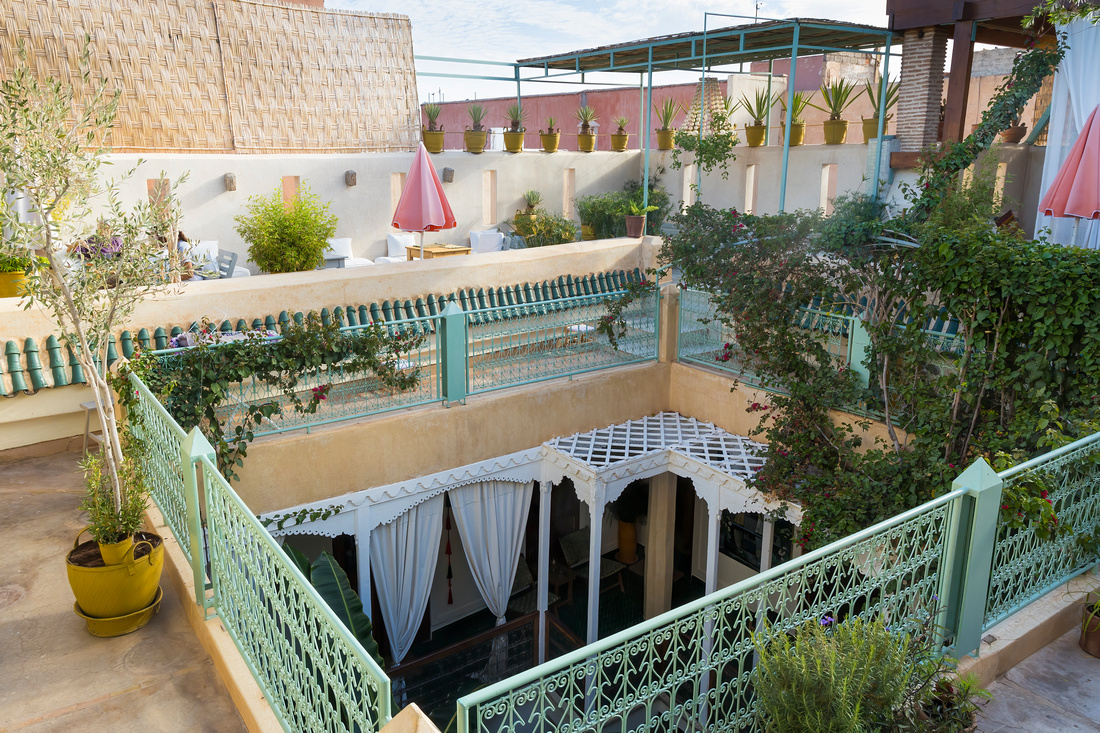
 This is the roof terrace of our riad, where we were served our breakfasts.
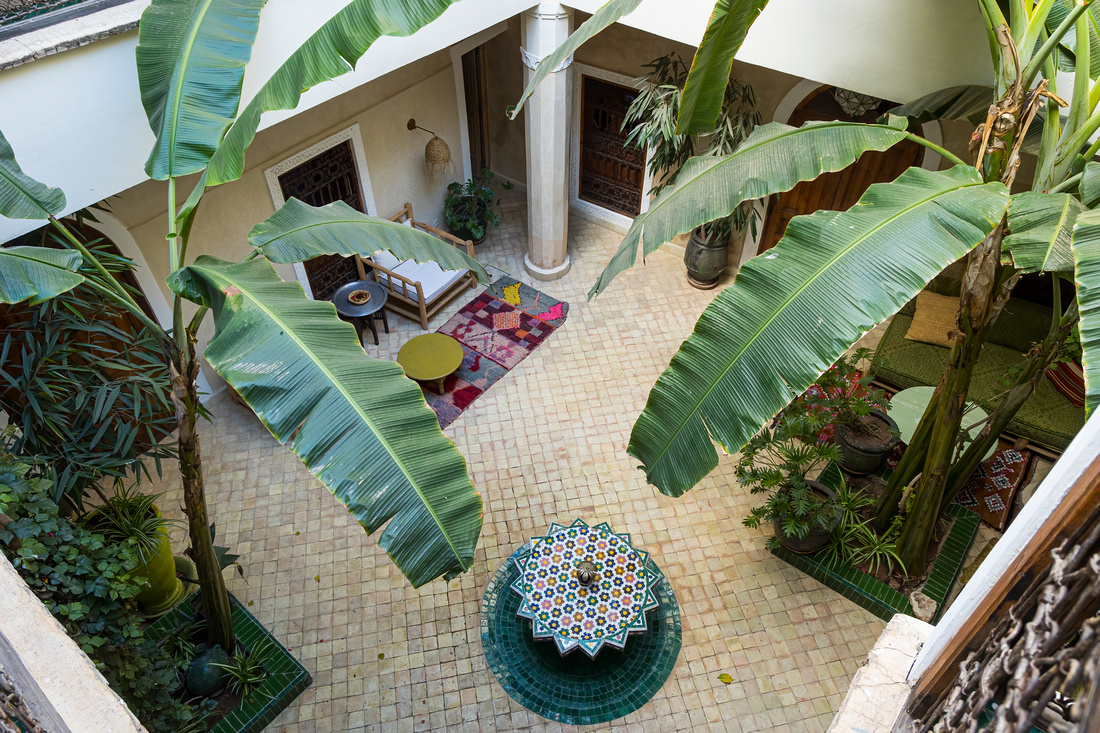 This is the view of the riad's inner courtyard shown from the roof terrace. The rooms' entrances were on this main floor and on a second storey.
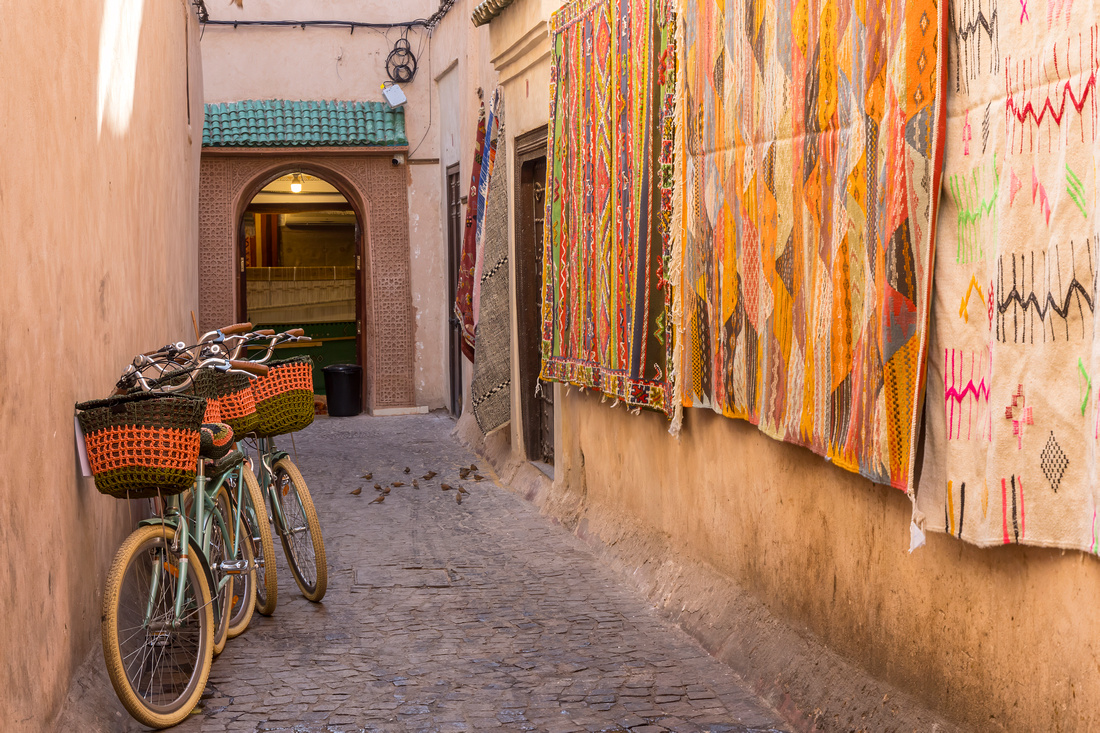 This is one of the alleys in the medina where our riad was located. One would enter from a door not unlike the one pictured here, and it would seem as if one had entered another world.
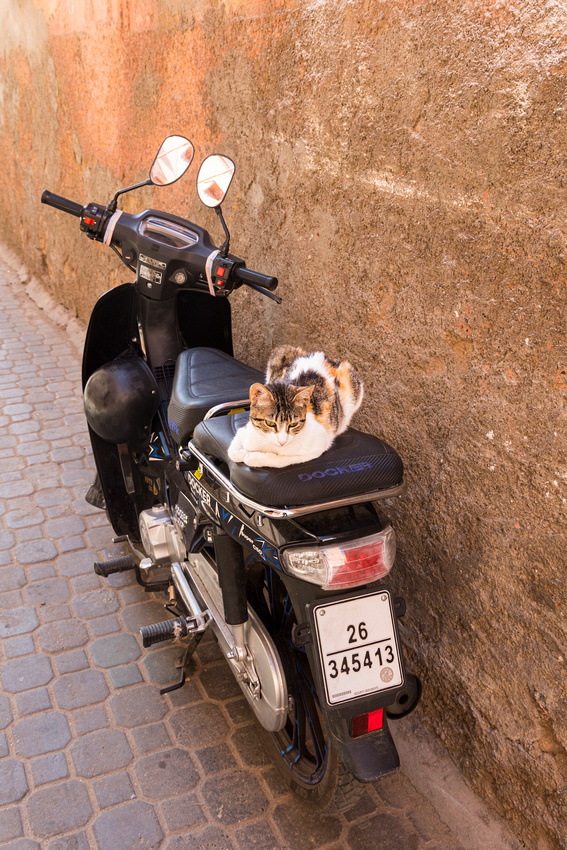
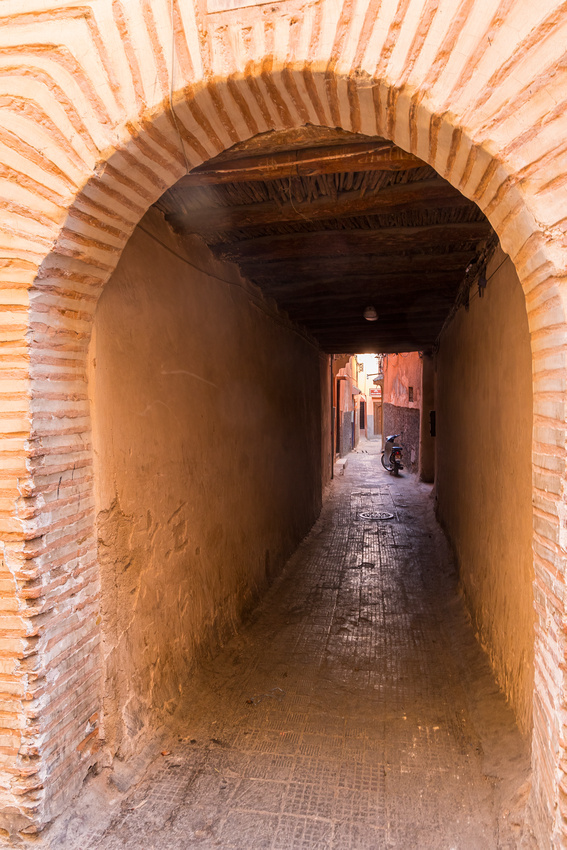
After leaving these side alleys, you would be in the busy markets of the medina.
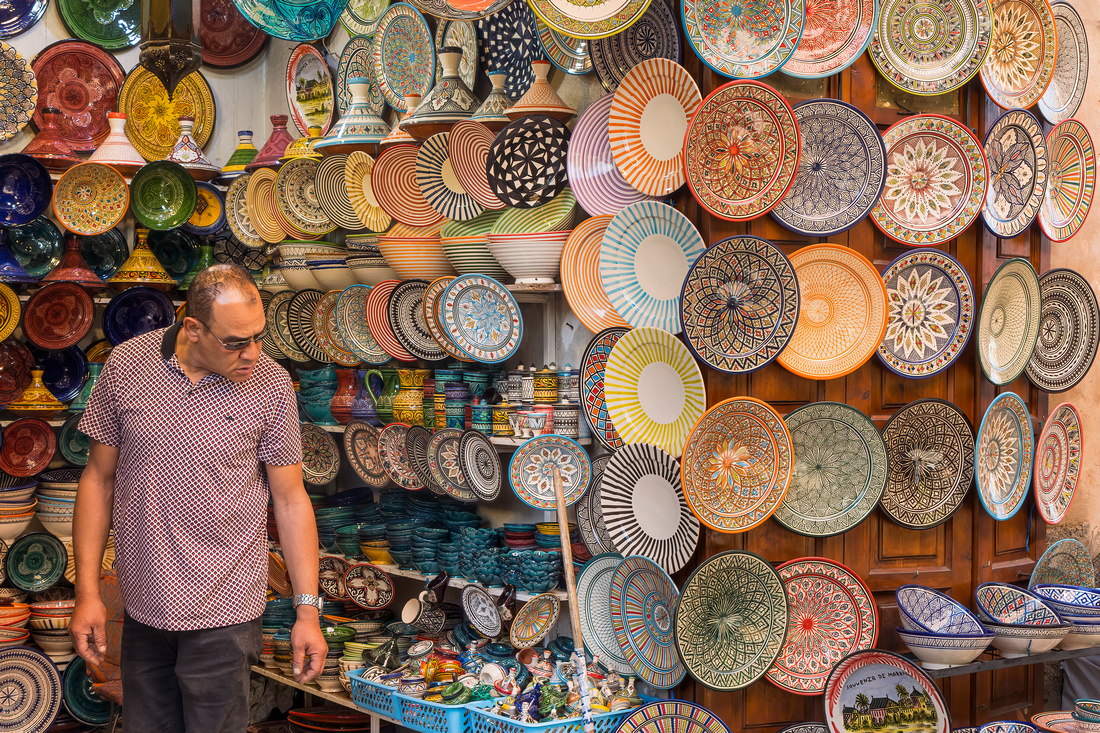
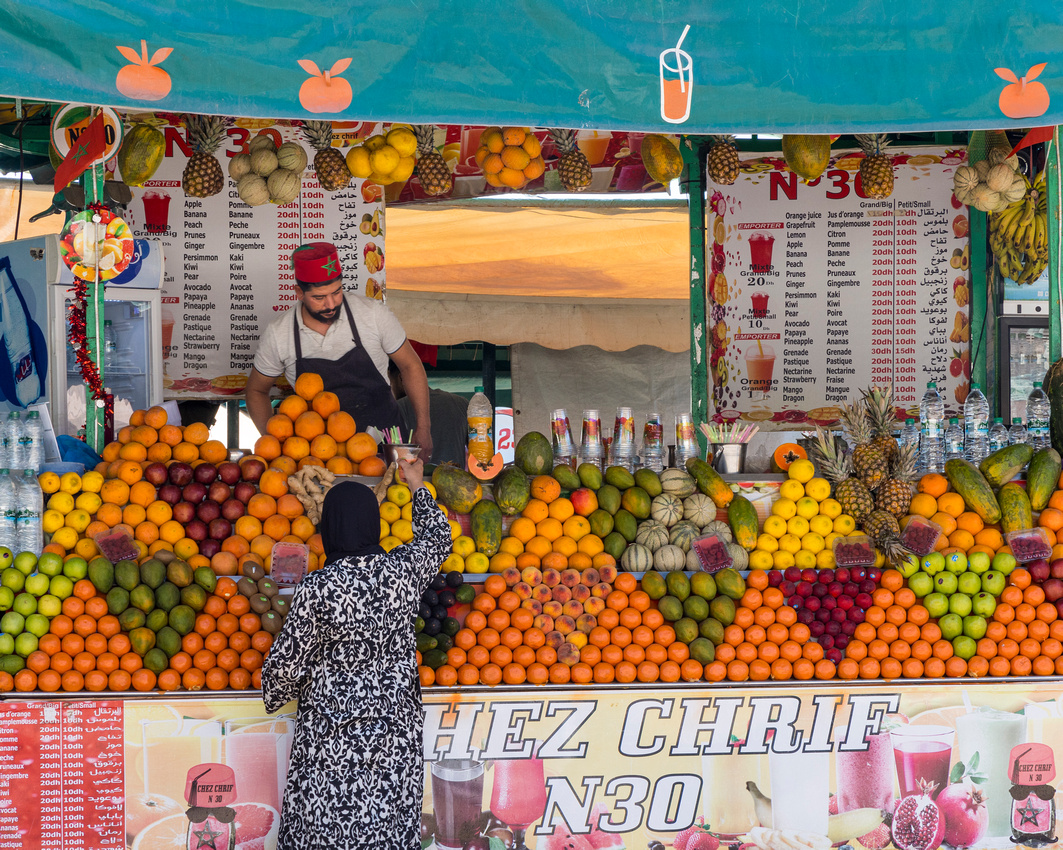
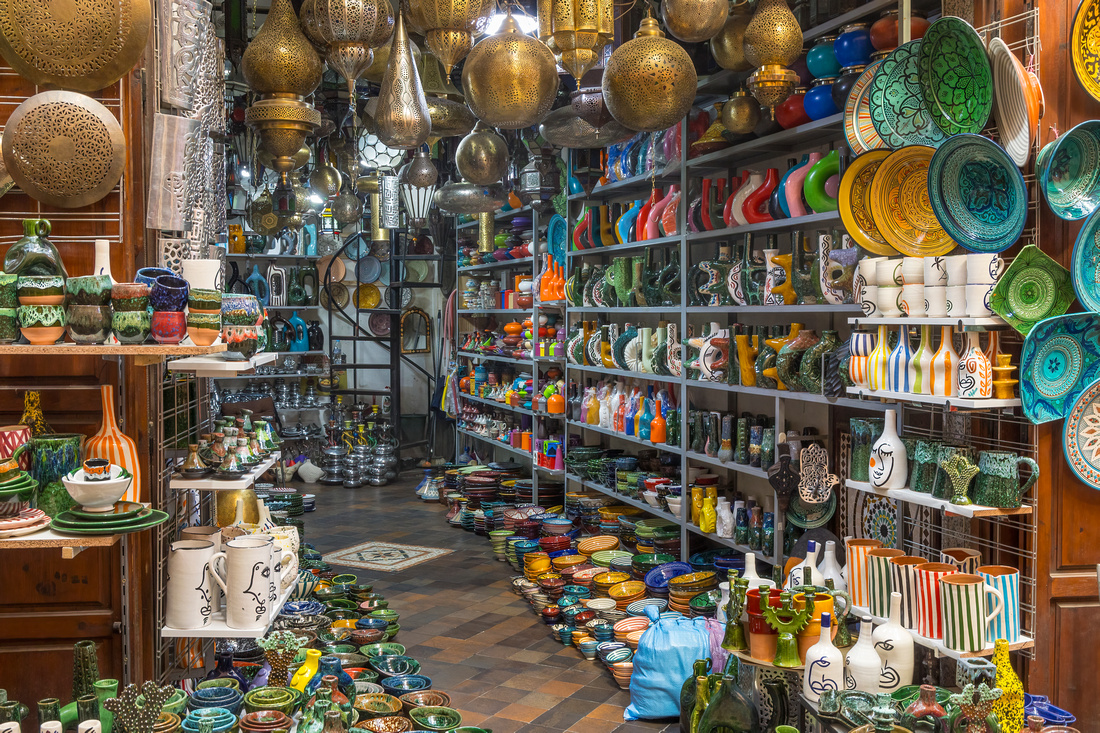


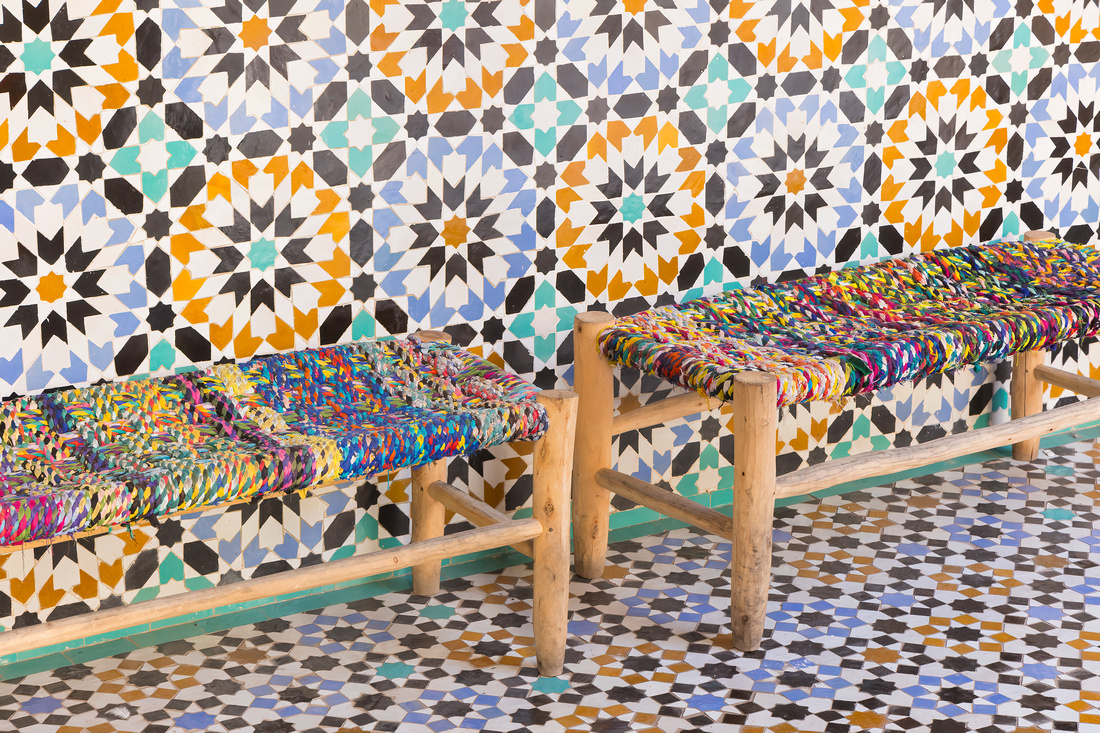 This scene was inside Medersa Ben Youssef, an Islamic Madrassa, or school.
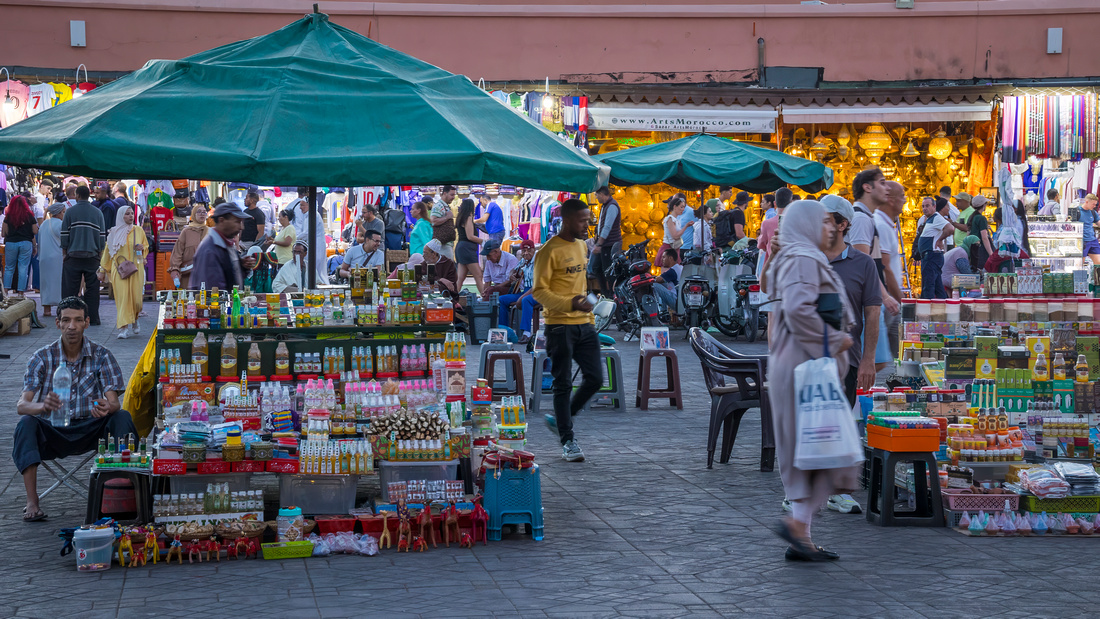 That evening we again wandered the busy Jemma el-Fna market square.
October 21 - Images of Morocco #13
 Here was our view of Mount Toubkal this morning from the deck of our hotel.
After breakfast, we set out on our walk down to Imlil, about one hour, to meet our bus.
It was not possible to drive this vehicle up to our lodgings below the mountain.
 Our destination, Imlil, which you see here, down in the valley.
 The walk was not difficult as it followed this road all the way.

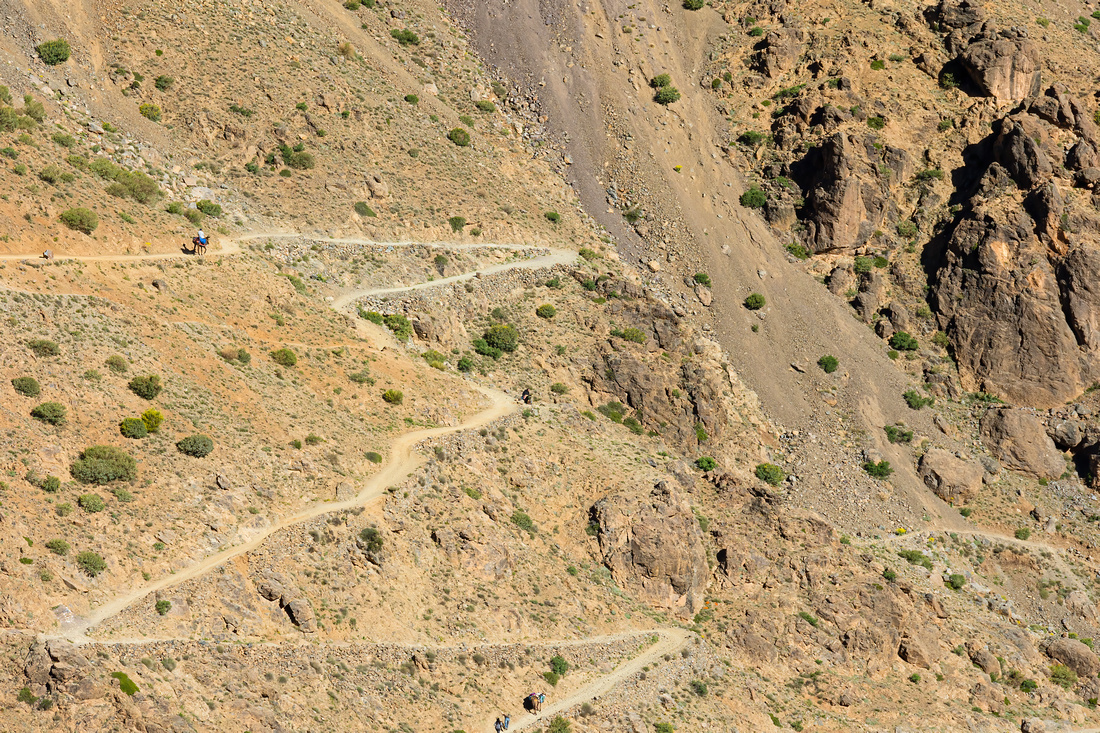 This was a trail on the other side of the valley across from us.
 As we looked back, this shows where we had walked down from.
 The village of Imlil as we got closer.
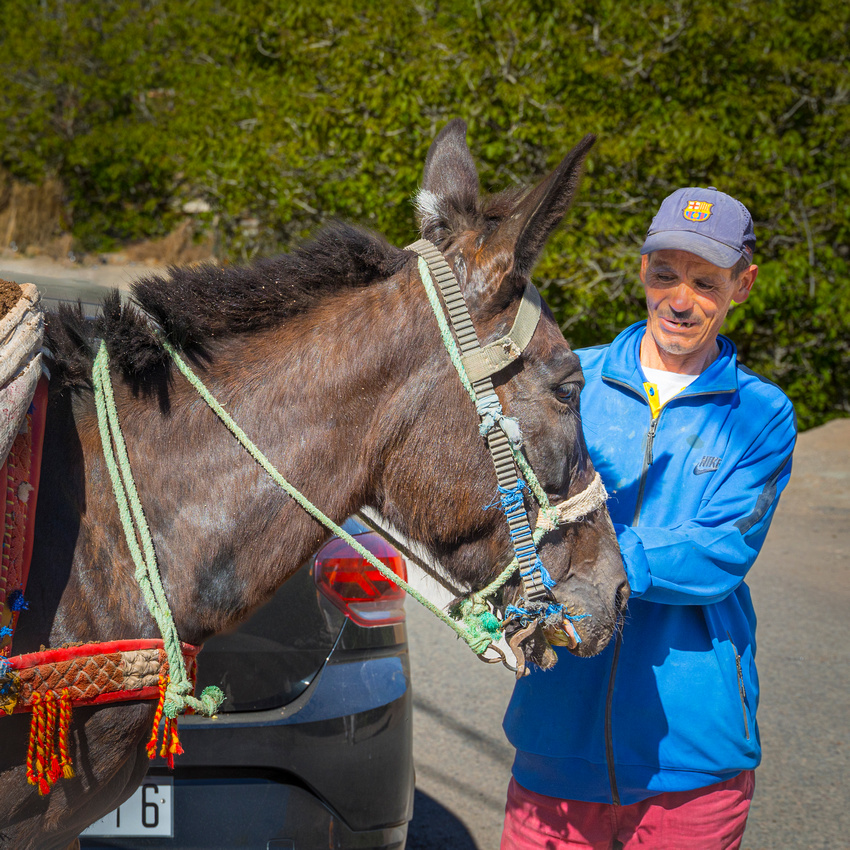
We arrived in Imlil after a leisurely descent. Here we got on our bus and set out for Marrakesh.
 A few hours later we were in the hustle and bustle of this large city. We were met by porters who took our luggage on two-wheeled carts through this medina and to our riad. Riads are former Medina homes built around an inner courtyard and refurbished as boutique hotels.
That evening we walked to the main square of Marrakesh, Jemaa el-Fna.
We got a table at a roof-top terrace restaurant overlooking the square.
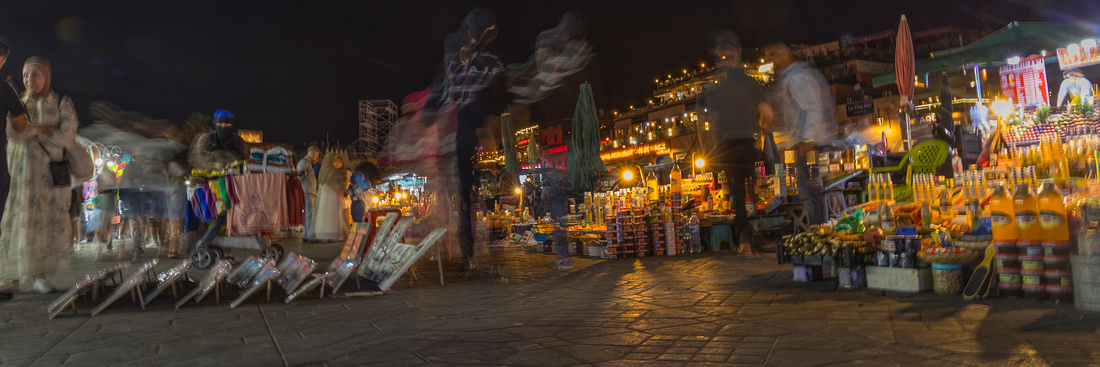
 As darkness approached, the square began to fill up with tourists and locals frequenting the food stalls and shops.


 Even amongst this spectacle, the faithful are called to prayer.
Thus ended our first day in Marrakesh.
October 14 - Images of Morocco #12
Happy Thanksgiving.
Happy Birthday (to me).
Day 12, we were again on the move. Our first stop was at a village carpet factory.
 A lot of beautiful carpets, but for us, they were too pricey, and also difficult to transport.
 Is this a metaphor about Kodak?

Storks had built a nest atop the local mosque's minaret.
 And then we were back on the road. This new highway was the main road between Marrakesh and the Sahara.
This highway took us over the Tizi n'Tichka Pass, through the central High Atlas Mountains (2260m).
The views from the highway summit were spectacular.


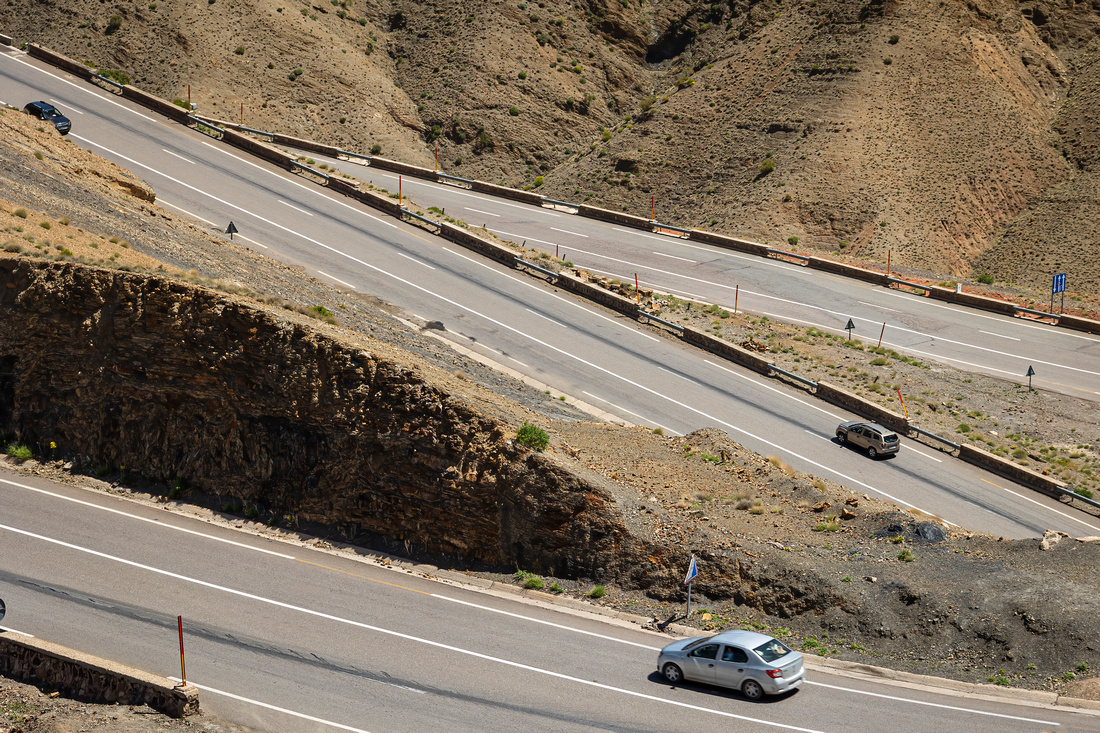 This was probably the most scenic and interesting part of our road voyage.
That afternoon we visited Hamid's sister Hafida and her three sons in the village of Tahnaout.

Hafida made us a dinner of local specialties, and then poured the national drink, green tea.

Then we continued into the High Atlas Mountains.
The road began to climb above the plains, eventually reaching the village of Imlil.
 But our ultimate destination was beyond Imlil, higher up.

This was the road to Toubkal, a small hamlet at the base of its namesake mountain.
 This was our view of Mount Toubkal from our lodgings. Toubkal is the second highest mountain in Africa.

Our room for the night was quite comfortable. Great to breathe mountain air.
After dinner we watched the local inhabitants on their evening strolls.
 The next day we would be driving to Marrakesh.
October 7 - Images of Morocco #11
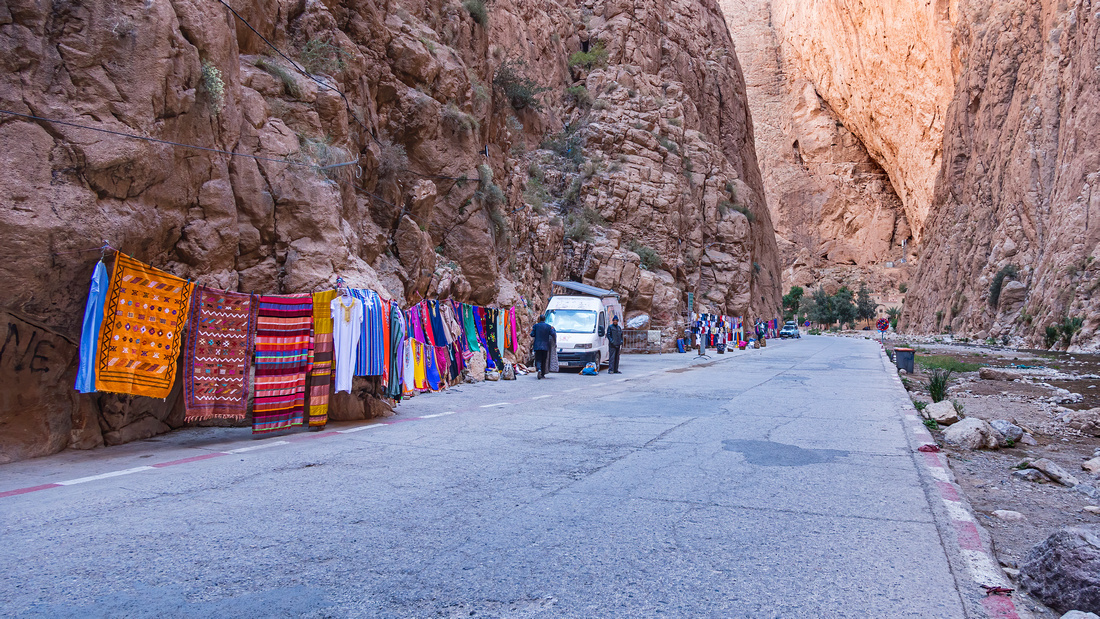
Our first stop of the day was at the impressive Todgha Gorge.

This is the road that leads into the depths of the gorge.
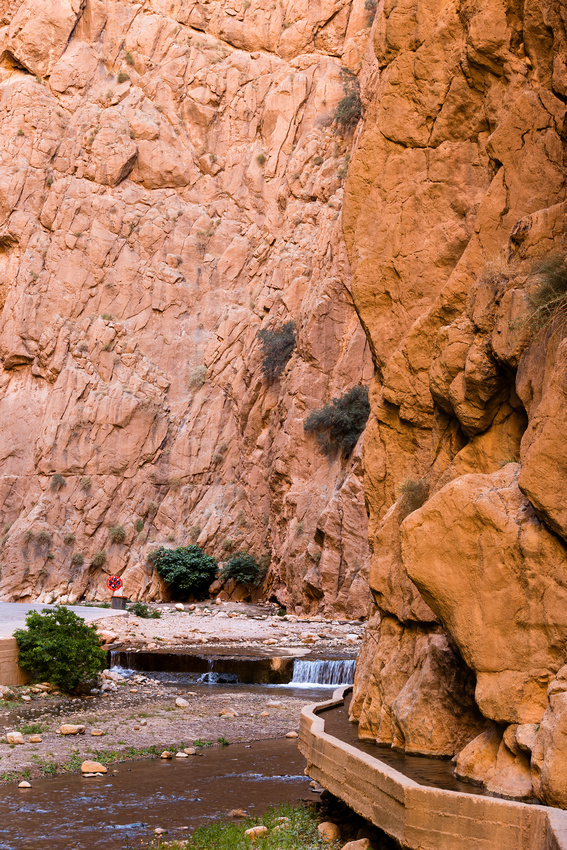
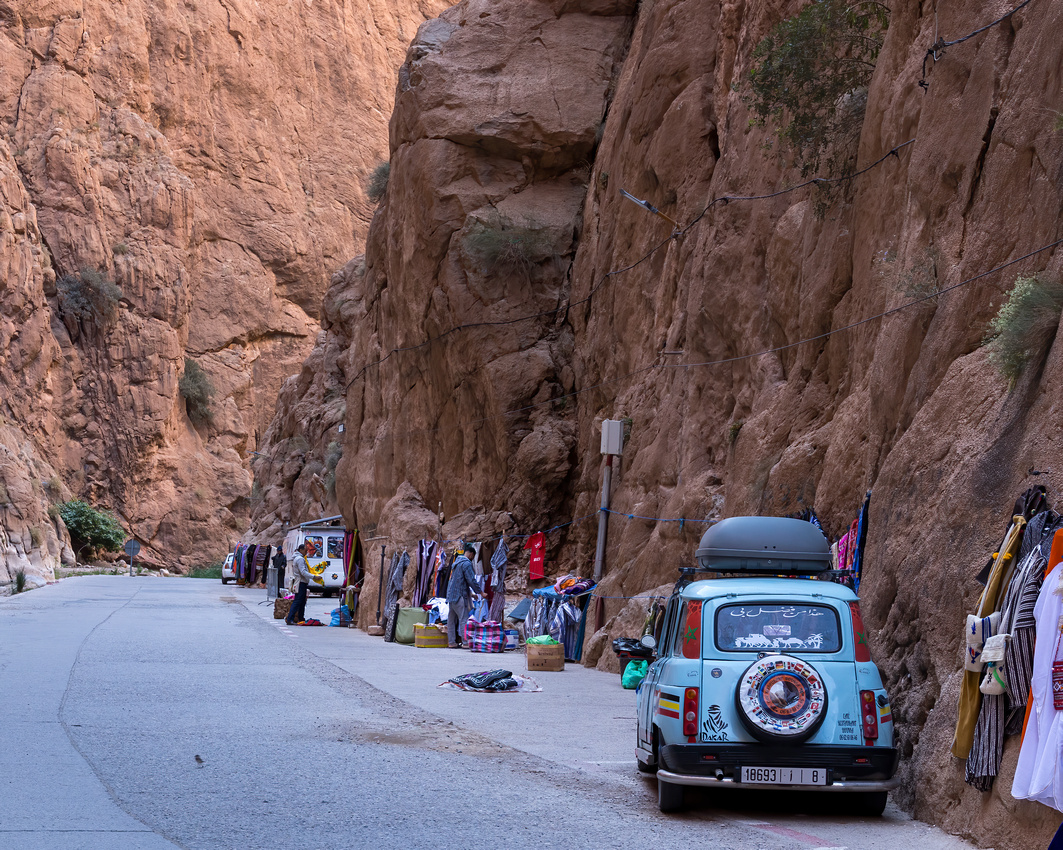 Because this is a popular tourist destination, a number of hawkers have set up here.
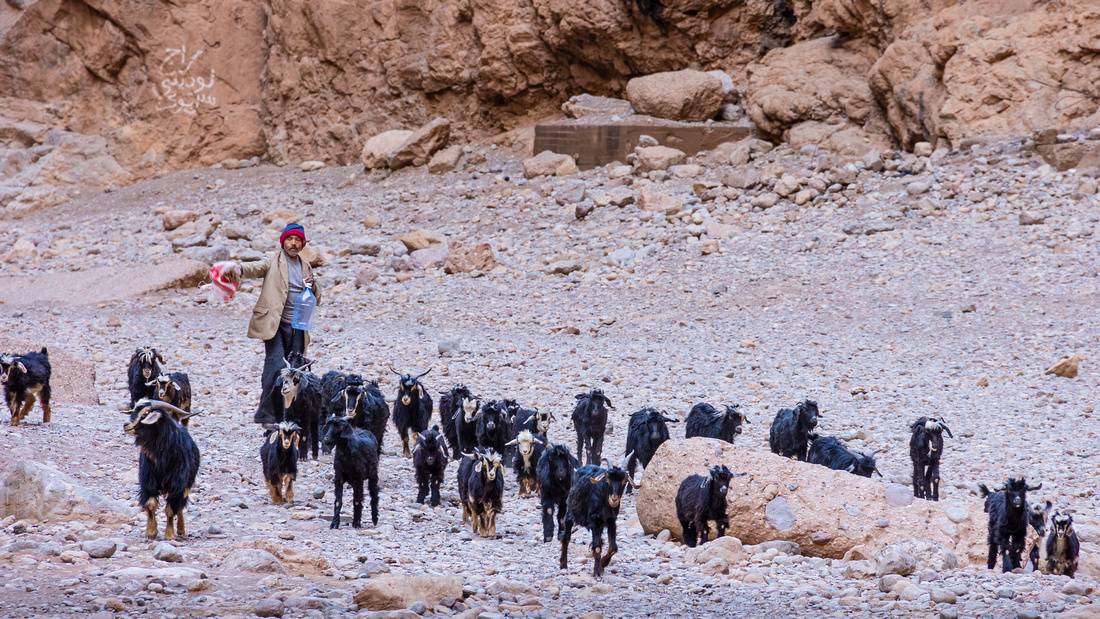 This goat herder approached along the dry river bed with his herd.
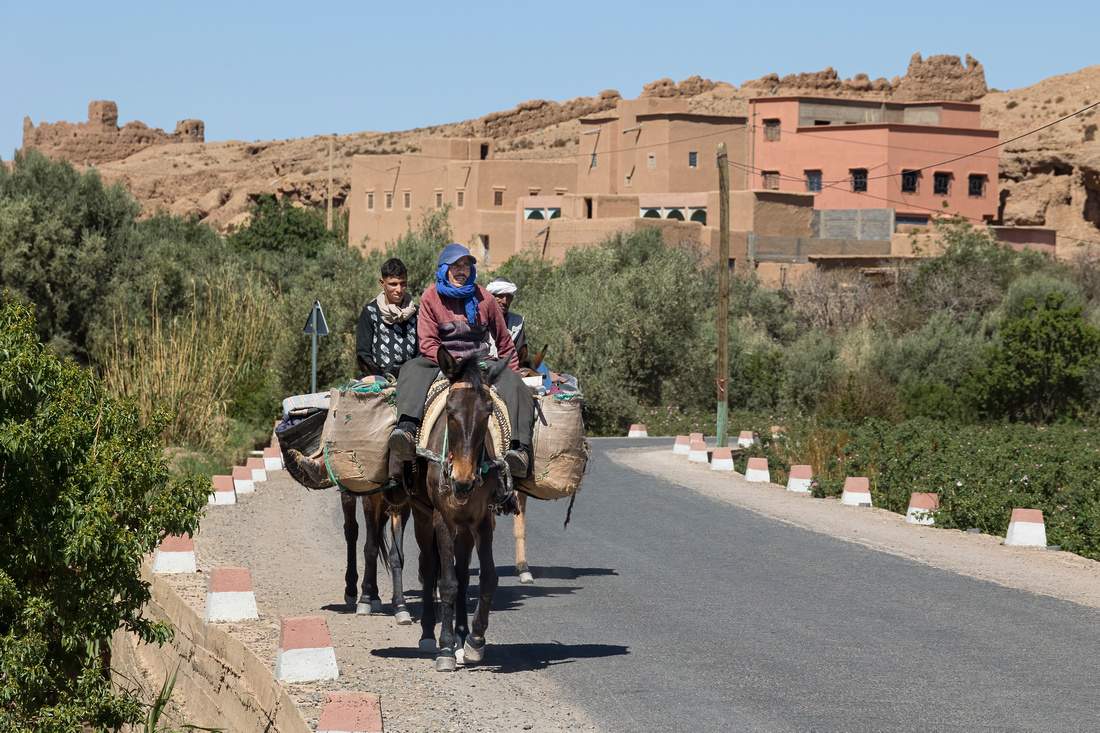 After some time in the gorge, we carried on.
Subsequently we visited one of the rose cooperatives in the aptly named Valley of the Roses, in the Dades Valley.
 Here women pick rose petals, which they deliver to one of the cooperatives in the region.
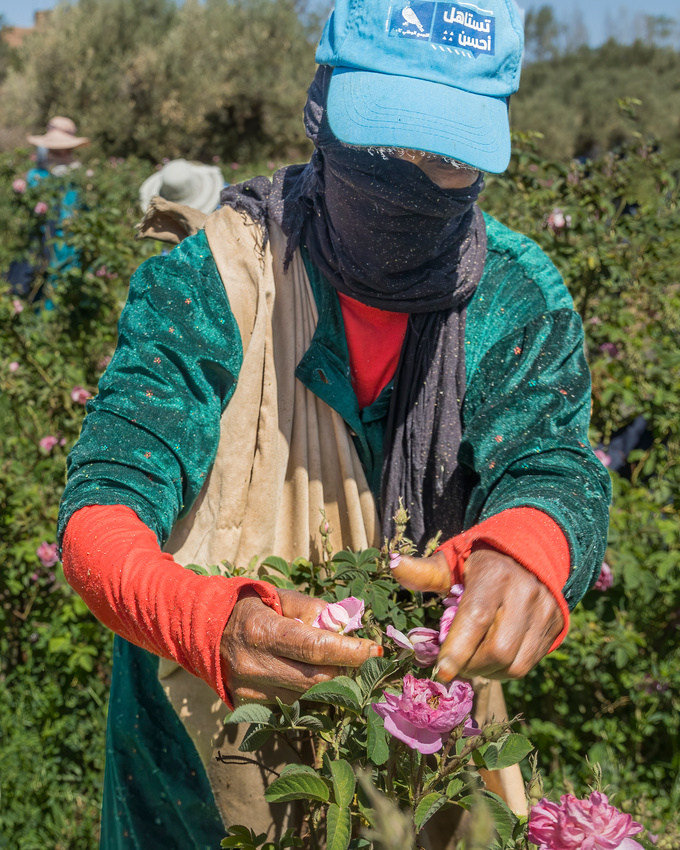
This is not easy work. Notice this picker's hands.
We then proceeded to the retail outlet where they sold a number of products produced from these rose petals.
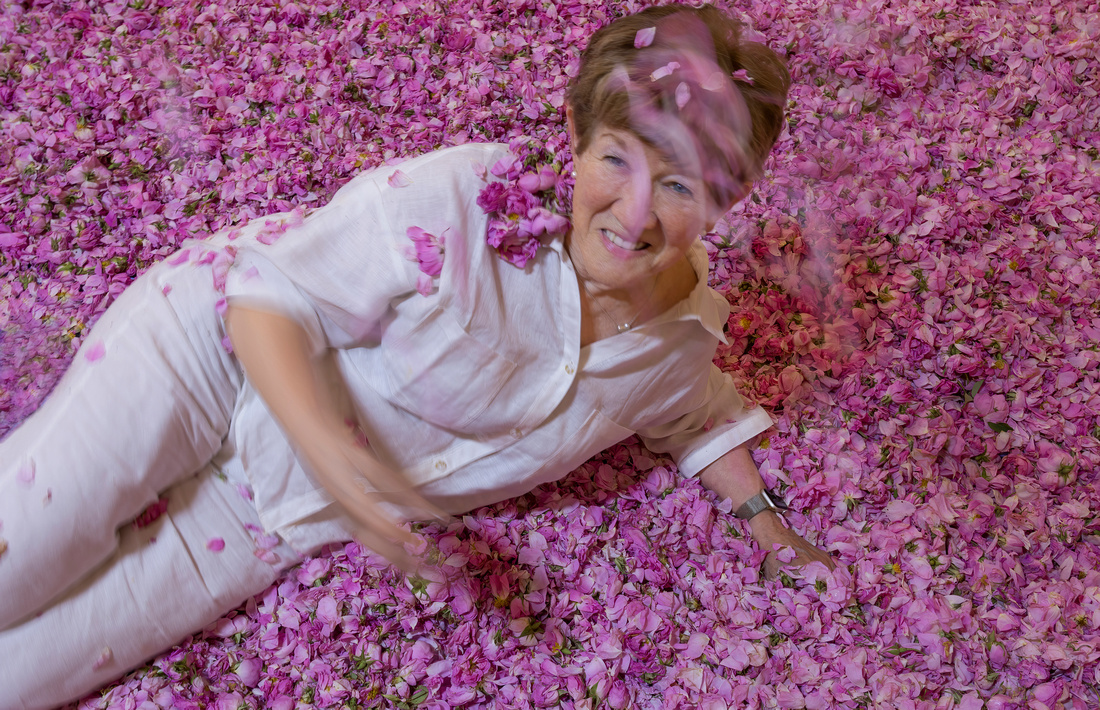 At this outlet Veda is lying in a bed of rose petals. Some others in our group did likewise for some interesting photos.
And then we hit the road to our next stop, Ait Benhaddou.
 This ksar, in an important location on the ancient trans-Saharan trade route between Marrakesh and Ouarzazate, is piled up on a low hill above the valley.
 We followed a network of lanes up to the top of the ruins.
 The few people who now live here make most of their livelihood from tourists.
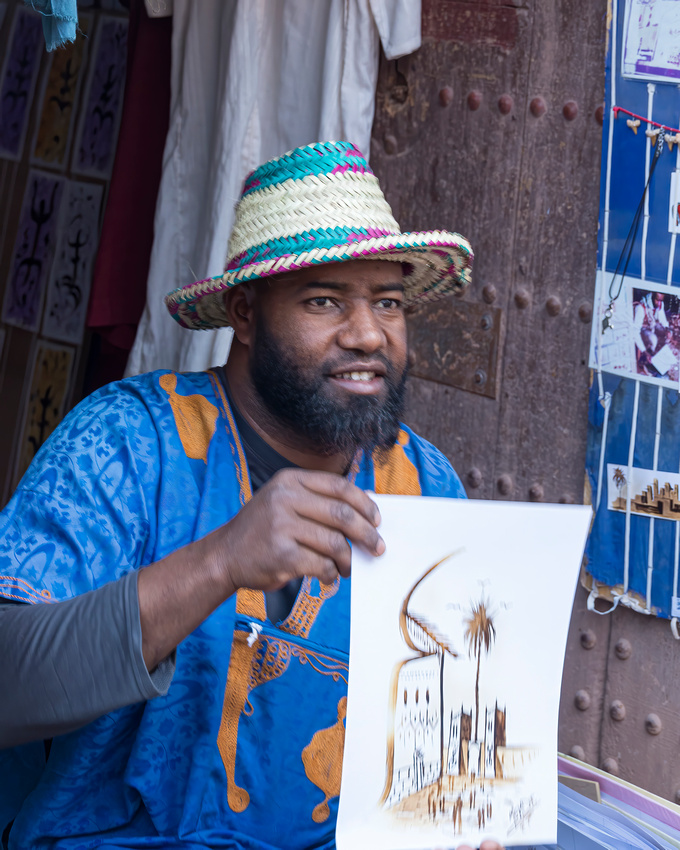
Some small agricultural activity still carries on.


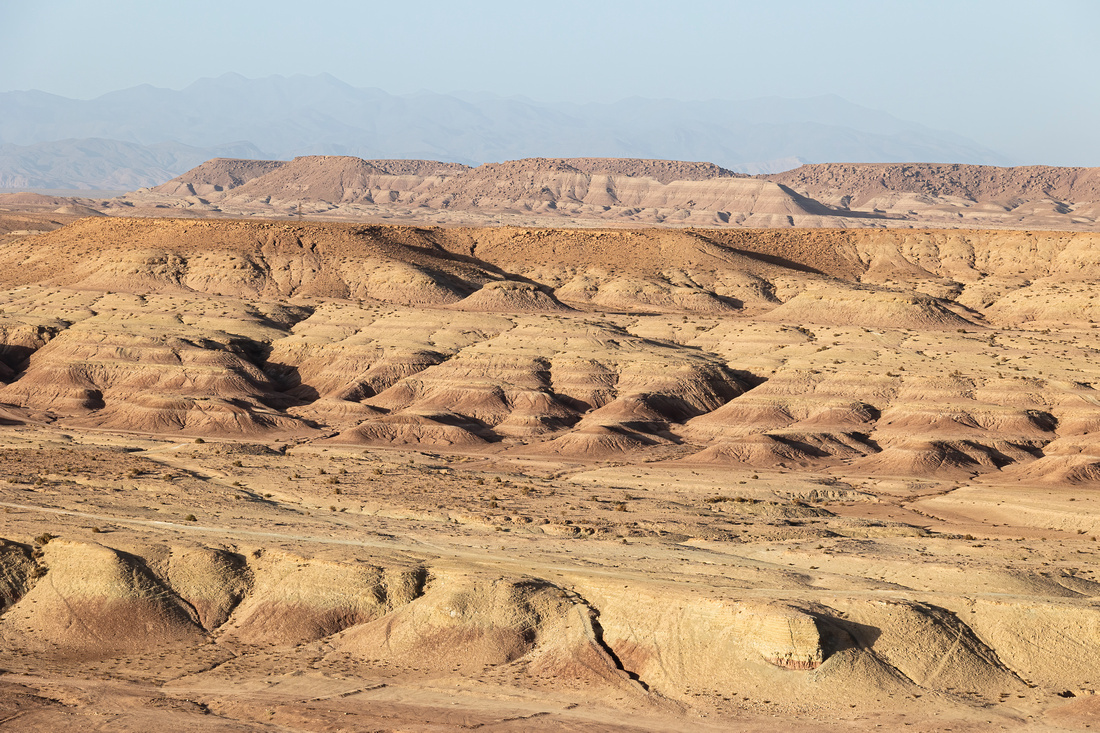 This is the view from the top of the ruins.
This was to be our last stop of the day. We are en route to Marrakesh.
September 30 - Images of Morocco #10
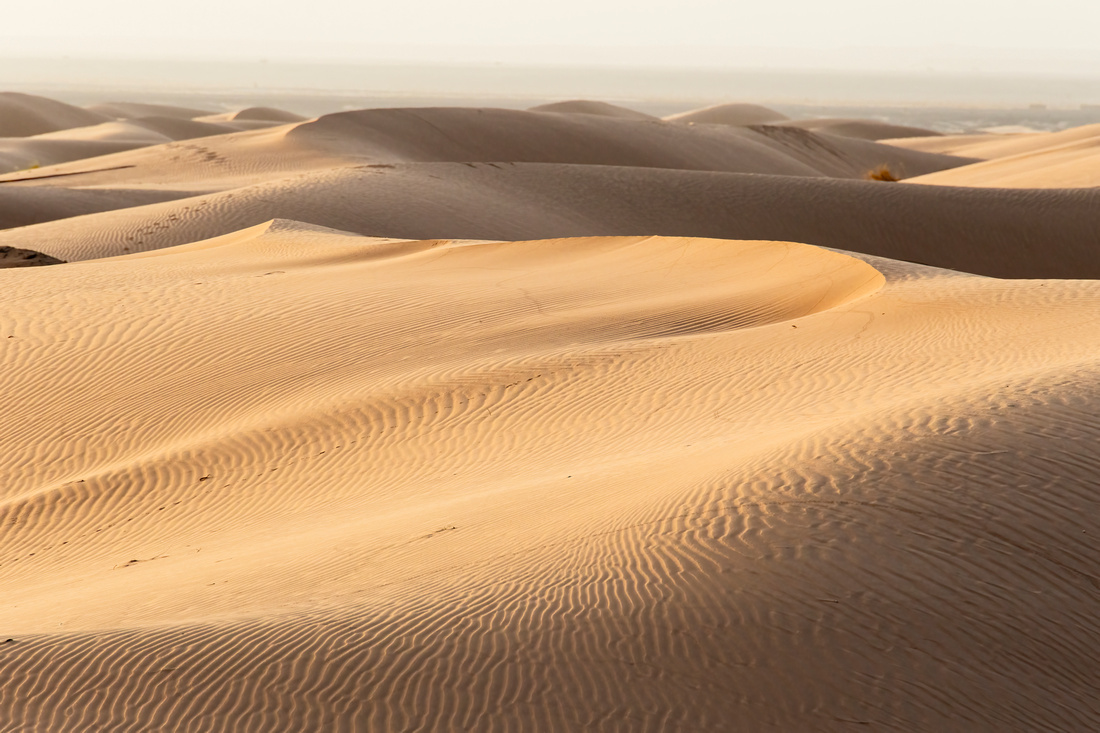 This morning we bade farewell to the Sahara Desert.
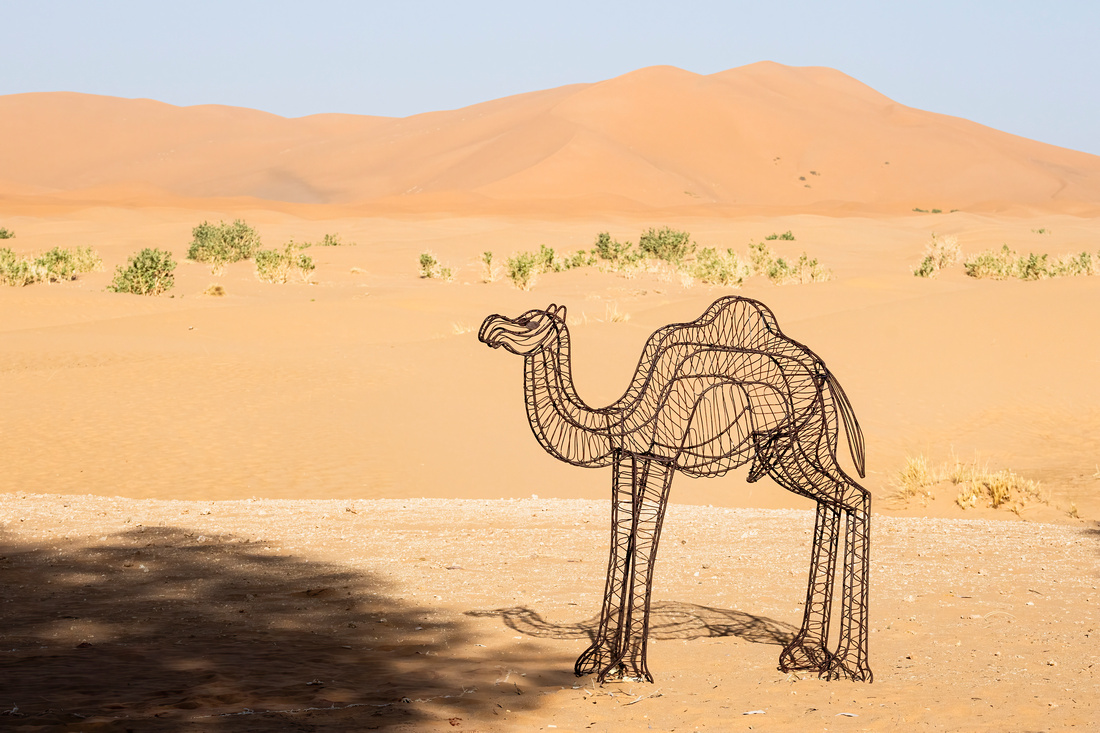 This was the most gentle camel in the whole of the Sahara.
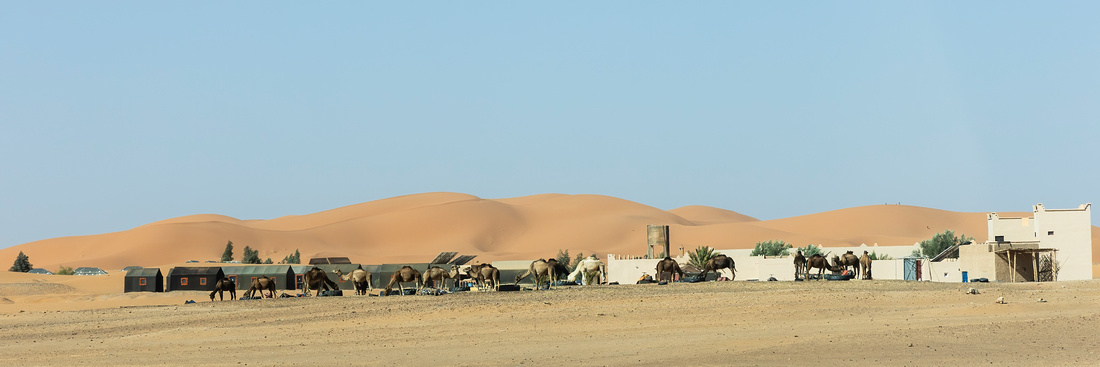
These are a couple scenes along our route that day.
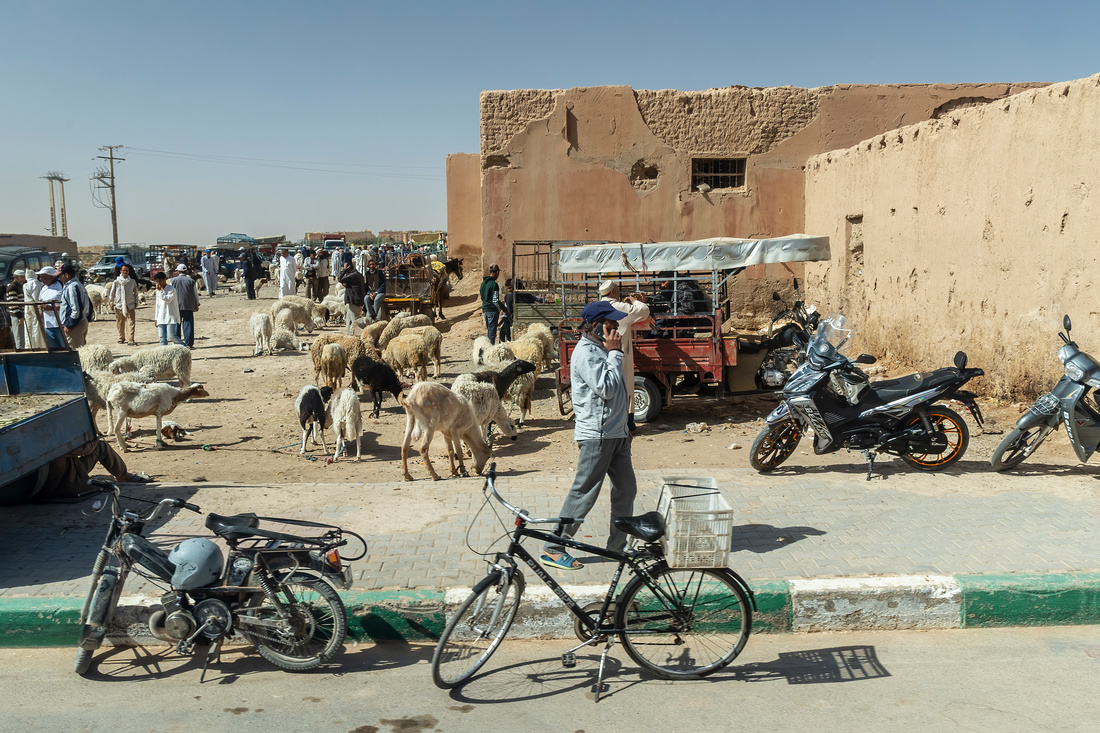
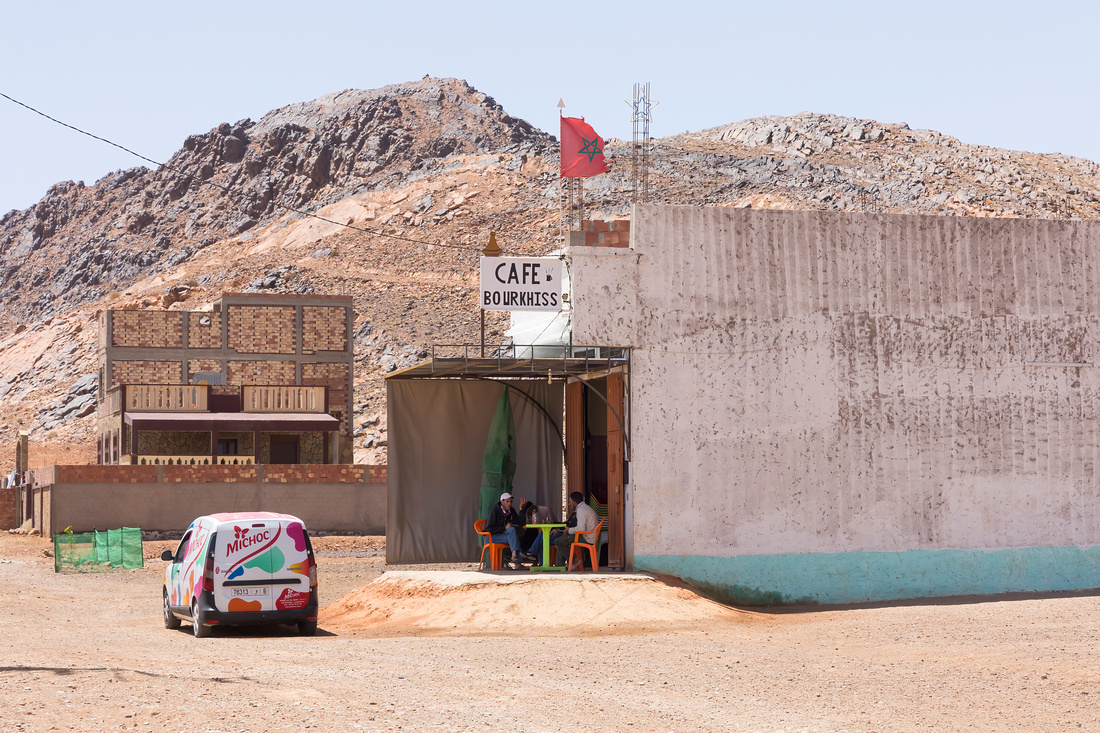 Our next stop was at the village of Tinejdad, in which we walked around.
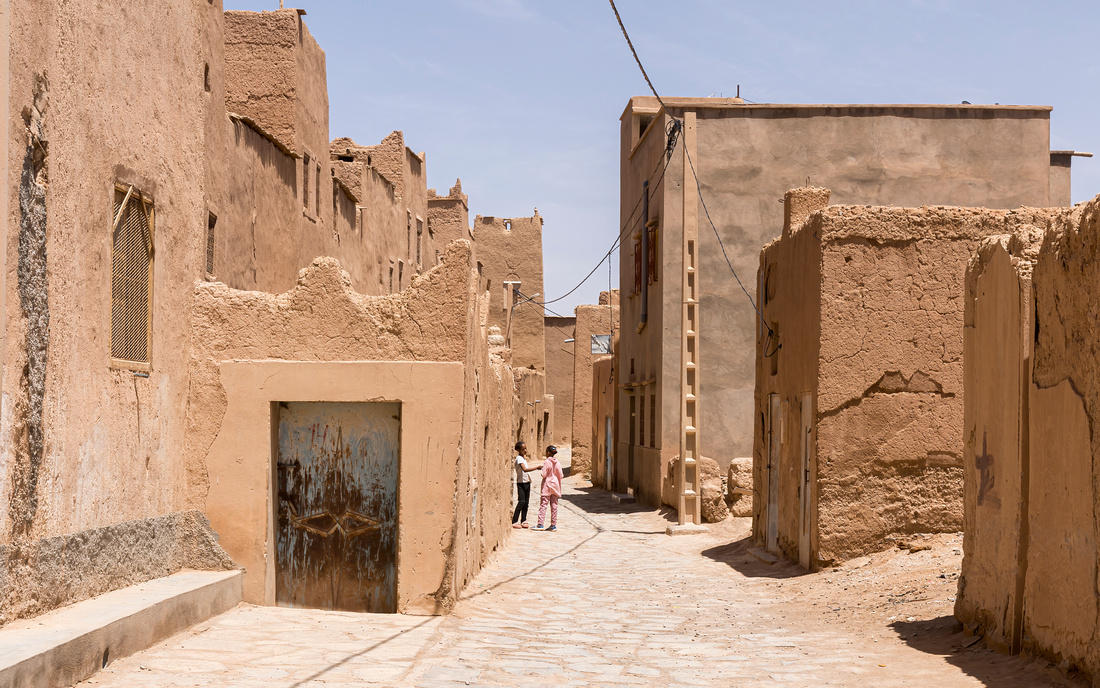
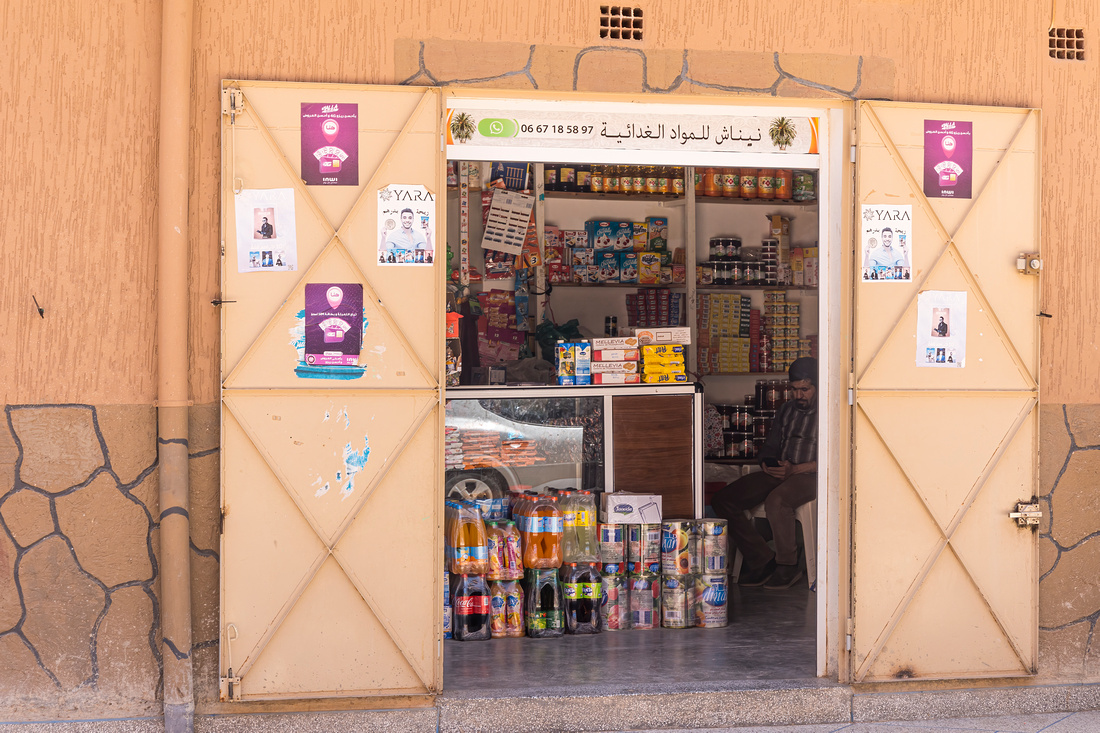
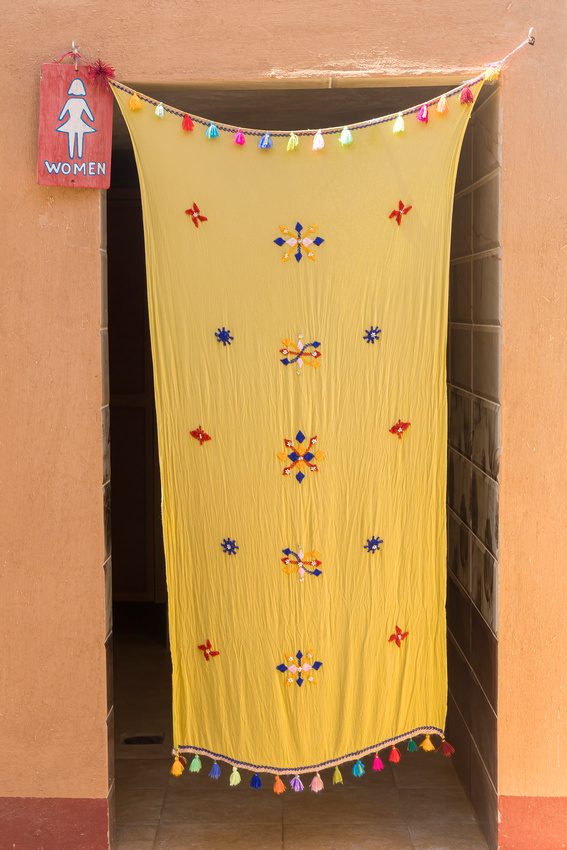
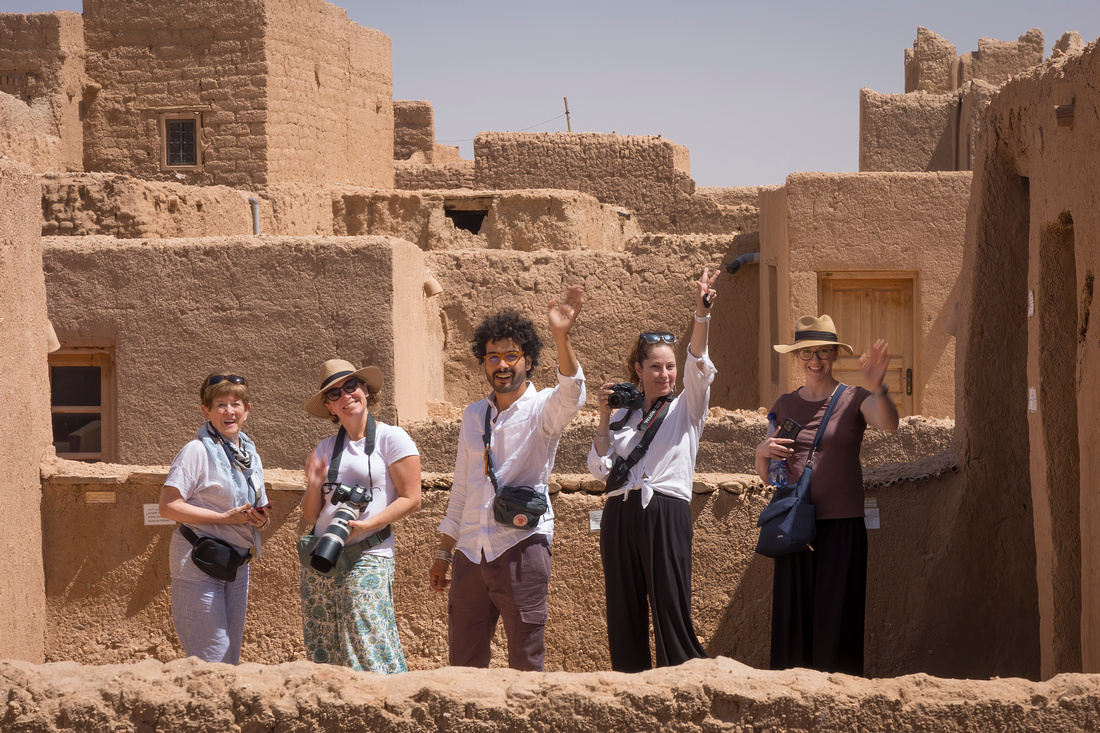 This is some of our group exploring Tinejdad.
Then we were back on the road.
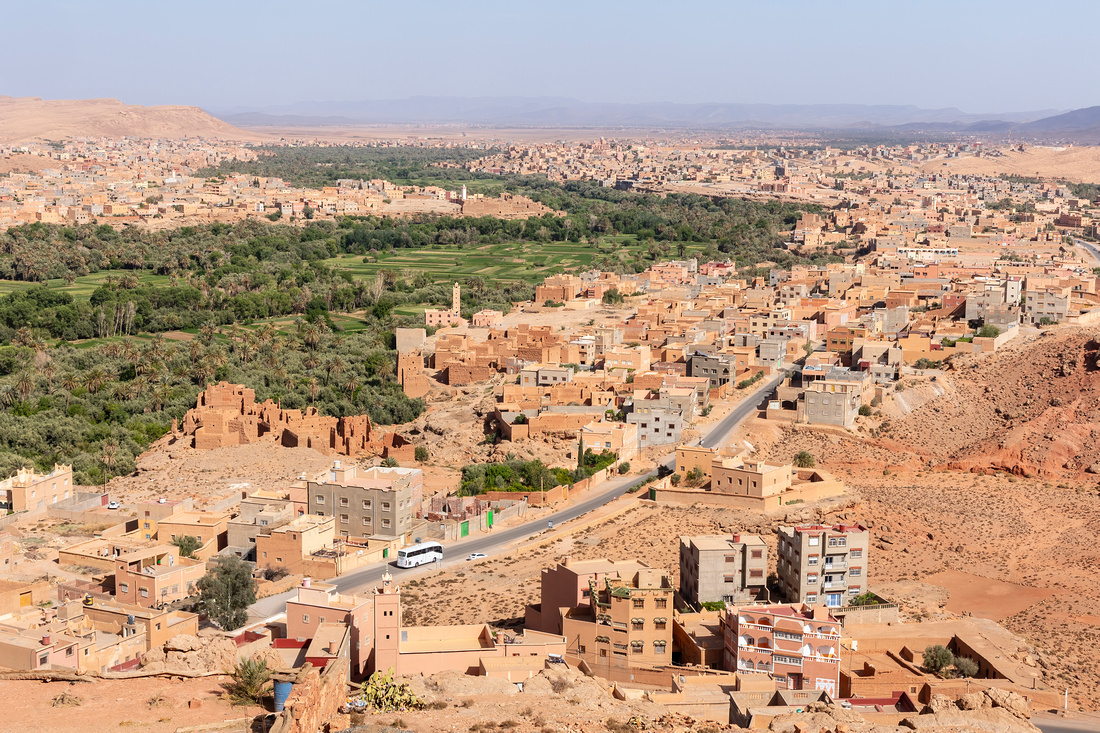 Our stop for the night was at Auberge Camping Atlas in Tinerhir (we did not camp).
But we did go for an evening stroll in the valley below the village.
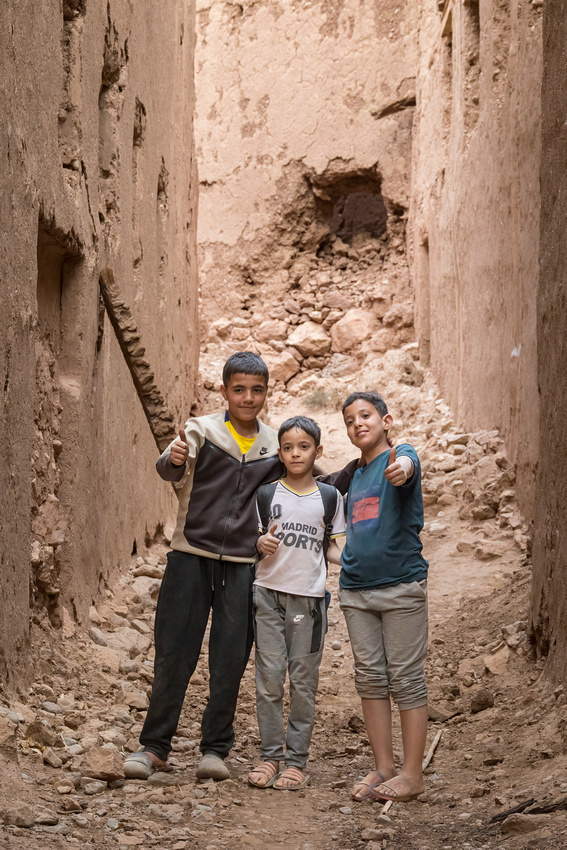
We met these young boys in the old rubble of an abandoned settlement.
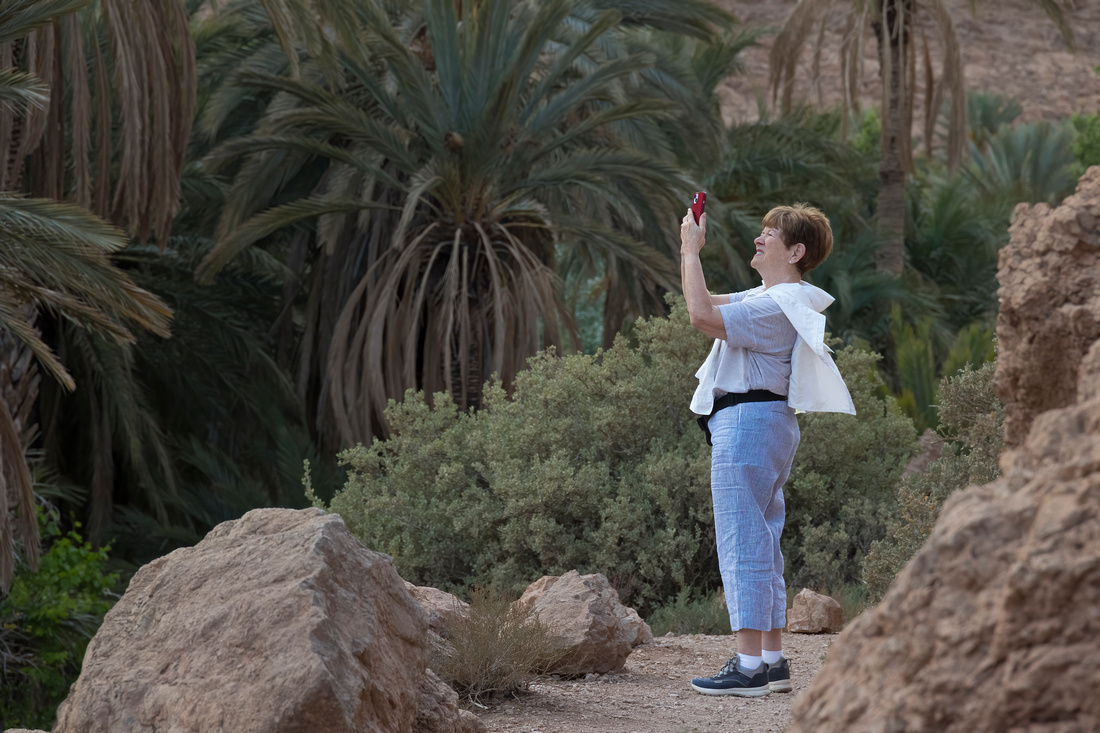
This valley below the village was an oasis of greenery and small farm plots.
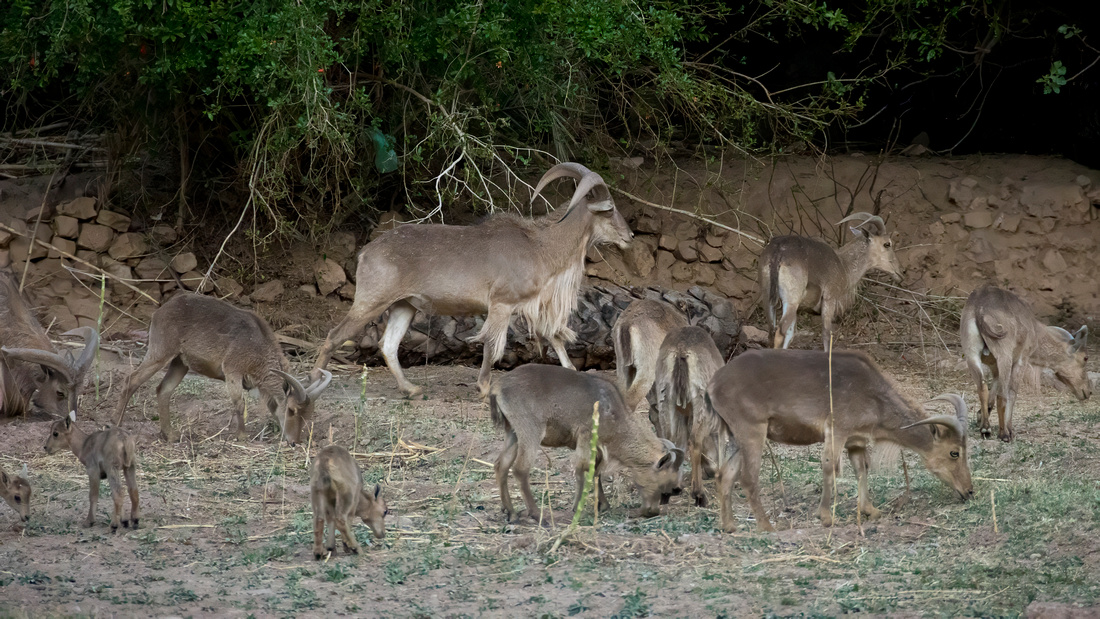 Near the end of our walk, late in the evening, we came upon a herd of Barbary Sheep. A lucky encounter.
They come down from higher elevations to feed in the farm fields in the evenings.
We returned to our hotel for our dinner and the night.